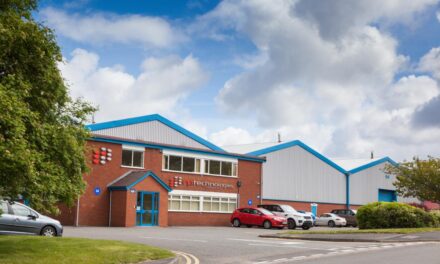
Since its inception in 2010, SHD Composites has built an enviable reputation based on strong family values and continuous investment in staff, facilities and not least of all new products. Today, the 50 plus strong company competes for and wins business globally. M&MT visited its headquarters in Sleaford, Lincolnshire to find out more.
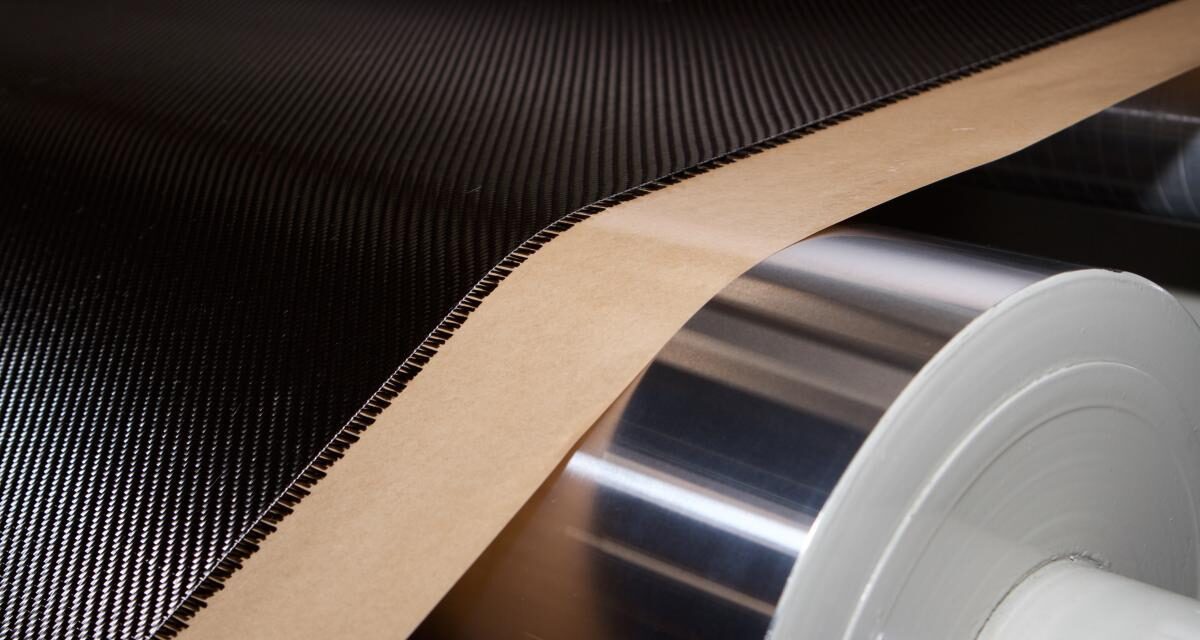
Having established an operational facility in Krsko, Slovenia last year to support customers in mainland Europe, which houses their third hot melt fabric line which will operate alongside the two fabric lines and Uni-Directional machine based in the UK. “This investment brings our capacity for component and tooling prepreg materials to over 6,000 m2 per day, with the opportunity to increase this with additional working patterns. A fourth hot melt fabric line is currently being commissioned which will further enhance our manufacturing capability” explains Darren Weston, Commercial Manager.
He continues: “This helps us achieve our goals on lead-time, where we aim to fulfil orders on a 2-week turnaround regardless of the scale of the enquiry. Although the capacity has grown, we have retained our passion for supporting customers regardless of the size of the order; large or small we always provide the same levels of service and professionalism.”
The AS9100 accredited company has also recently joined the National Composites Centre as a Tier Two member, and plans are underway to engage fully with the Catapult Centre to reinforce SHD Composites technical abilities. In fact, over a quarter of the staff are technically biased, involved with product and process research and development.
New products, such as the recently launched PS200 flame retardant prepreg is an example of the fruits of the comprehensive R&D efforts. “PS200 is a bio-based resin system that is derived from a food waste product. This sustainable material yields not only technical benefits with regards to its class leading flammability and high temperature performance but has the added benefits of containing no hazardous materials providing a safer environment whilst in manufacture,” states Business Development Manager Simon Howarth.
PS200 has been developed to specifically solve the problem of the fire risk that electric batteries pose. “We developed PS200 primarily for the manufacture of electric vehicle battery boxes. With the growing consumer and commercial vehicle demand for environmentally friendly electric and hybrid power systems we know there will be a requirement for the capabilities of PS200 in the market. It is available in a number of reinforcements and capable of autoclave, oven or press curing from 120°C, so the production process for any finished component is very flexible,” Simon Howarth says.
The mechanical properties of this material, such as tensile strength, modulus, compression and interlaminar shear are very similar to phenolic composites and more importantly for cost sensitive markets, the cost base is also on par with the more traditionally used materials.
Testing of the new PS200 has been extensive as Simon Howarth confirms: “With the applicable post cure regime it is possible to achieve peak Tg in the region of 330 to 350°C, which is almost at ceramic levels. We have tested battery failures within a structure manufactured from PS200 the resultant internal temperatures exceeded 1,000°C with the structure itself retaining its profile and containing the heat source thereby preventing migration.”